
Final seminar highlighted key insights from the four-year PMP project
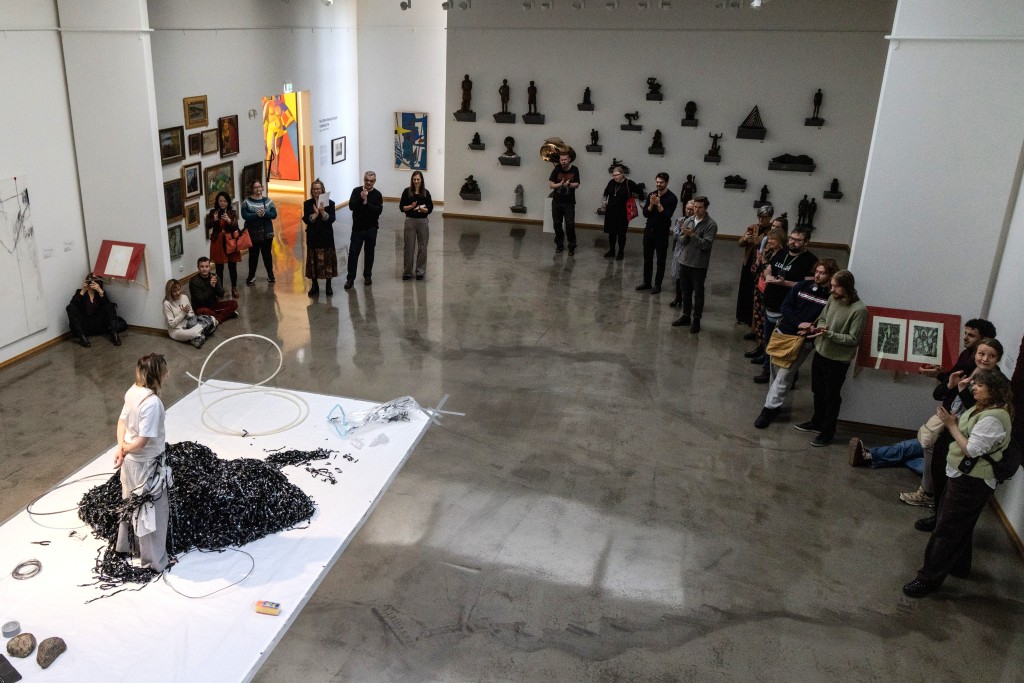
The Professional Media Presence (PMP) project culminated in an international hybrid seminar bringing together artists, researchers, students and creative sector professionals from across Europe. The event provided an opportunity to reflect on the project’s results and explore how artists can strengthen their professional media presence in a rapidly changing digital environment.
Throughout the event, speakers shared experiences from project activities, pilot actions and collaborations carried out during the PMP project. A common theme emerging across the presentations was the growing importance of digital platforms, networking, collaboration and strategic communication in artists’ professional careers.
Navigating a changing media landscape
In their presentation, Anni Sundbacka and Emma Uotinen from Turku University of Applied Sciences revisited the original objectives of PMP and the themes explored throughout the project, including media & art, online media & digital storytelling, social media & media readership, future media and media & professional identity. As the project progressed, additional themes such as accessibility and artificial intelligence became increasingly important, reflecting the evolving environment in which artists work today.
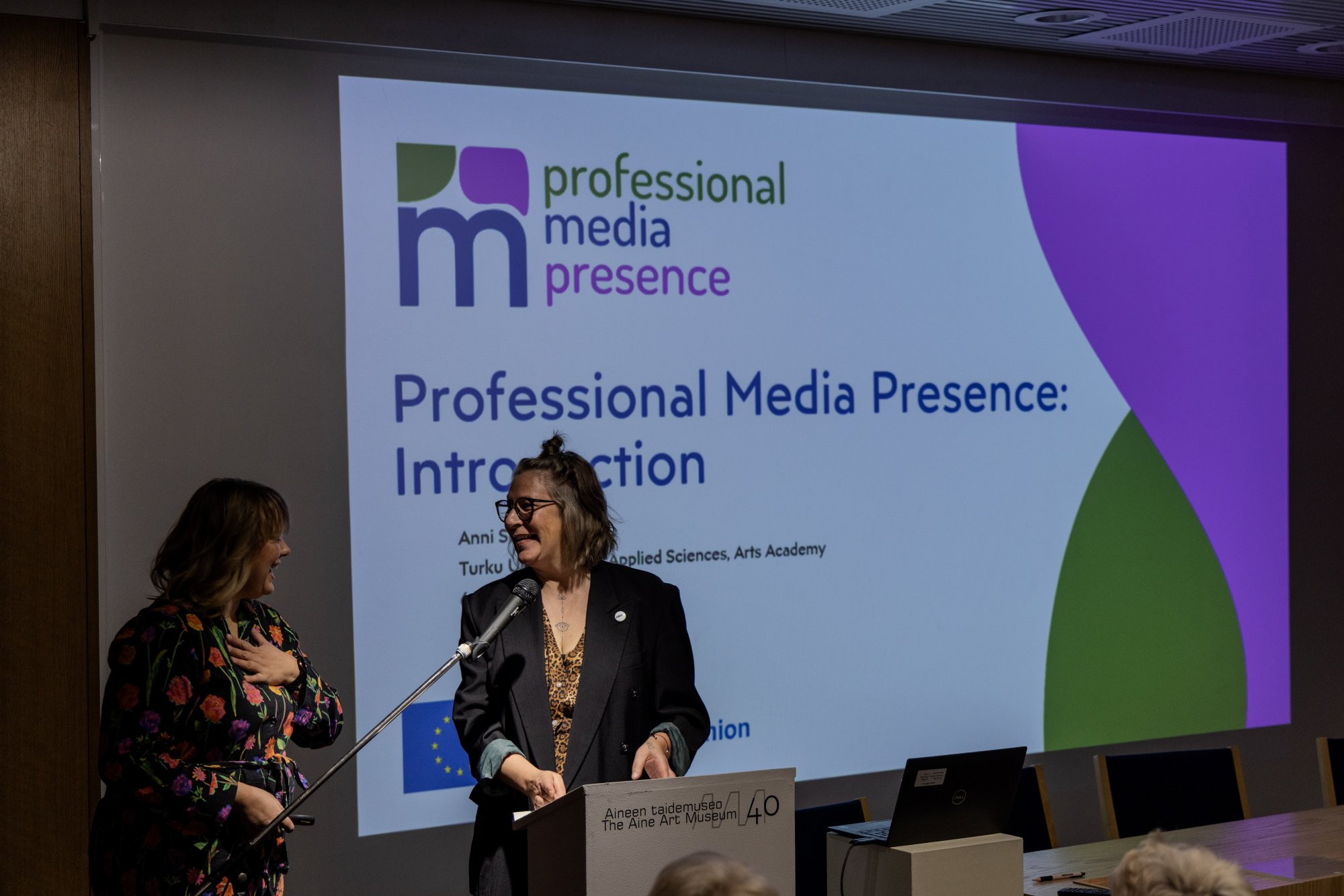
As they noted, the media landscape changed dramatically between the launch of the project in 2022 and its conclusion. What initially appeared as a challenge gradually became one of the project’s most valuable learning experiences. The changing environment highlighted the need for artists to continuously adapt to new platforms, audiences and technologies.
Artists learning from artists
PMP project partner, Jasmina Šarić, introduced the from artists to artists -approach (FATAA) that has influenced both the planning and implementation of PMP activities. The framework views artists as workshop leaders, researchers and curators.
Central to the approach is the idea of horizontal learning: artists sharing experiences, experimenting together and generating knowledge collaboratively. The framework could be seen throughout PMP activities, from workshops and residencies to exhibitions and the development of project outputs.
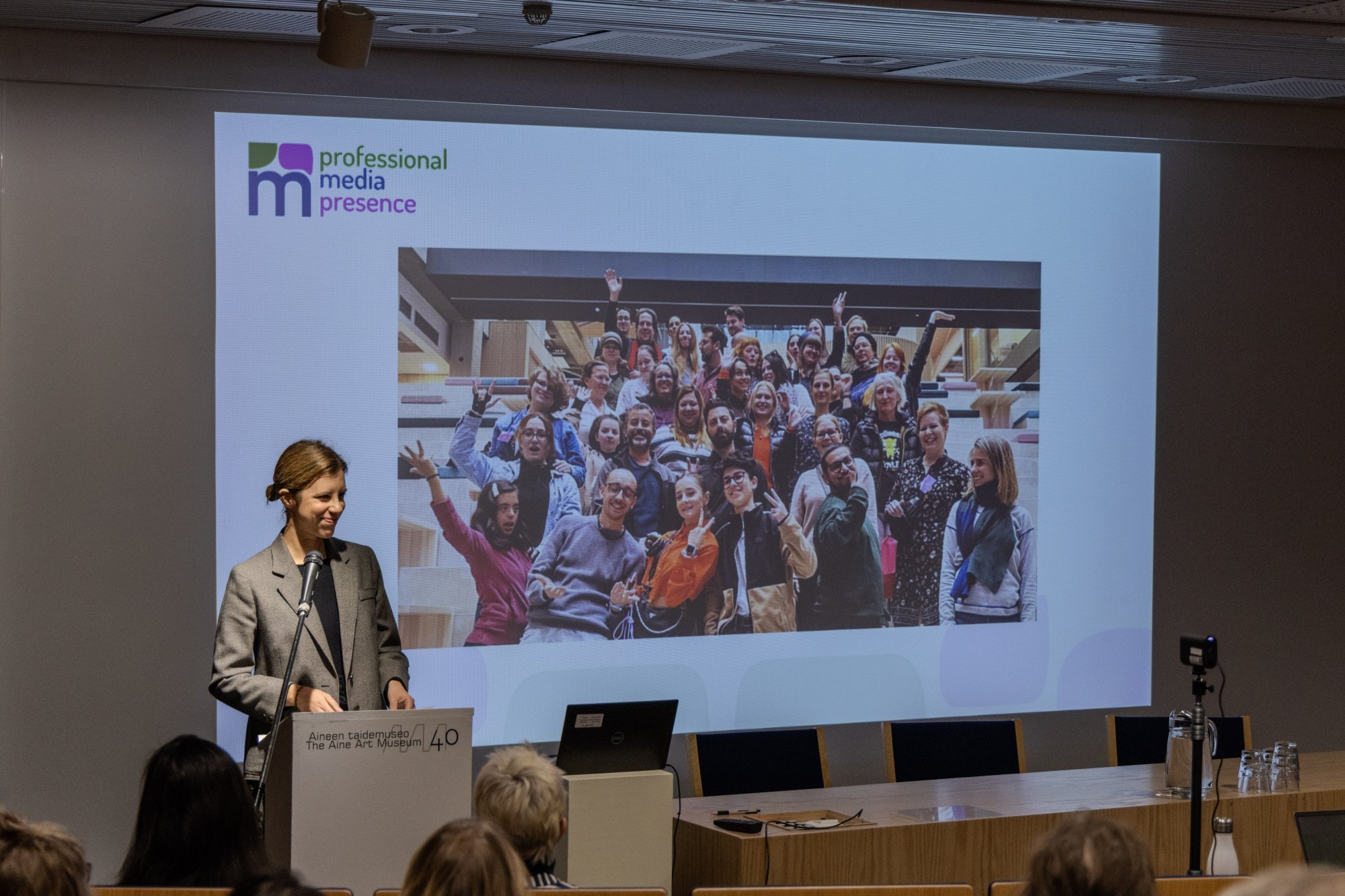
As Šarić emphasised, “When artists teach each other, research with each other, and curate each other, they don’t just share the space — they build a sustainable, transnational ecosystem.” Rather than creating temporary collaborations, this approach fosters relationships and networks that support long-term creative exchange across borders.
From residencies to shared knowledge
The practical outcomes of this collaborative FATAA framework were perhaps most visible in the Forms of Presence publication, presented by Panu Pohjola from Lapland UAS. Developed together with artists participating in the project’s residencies, the publication brings together reflections, experiences and practical insights on media use from artists across Europe.
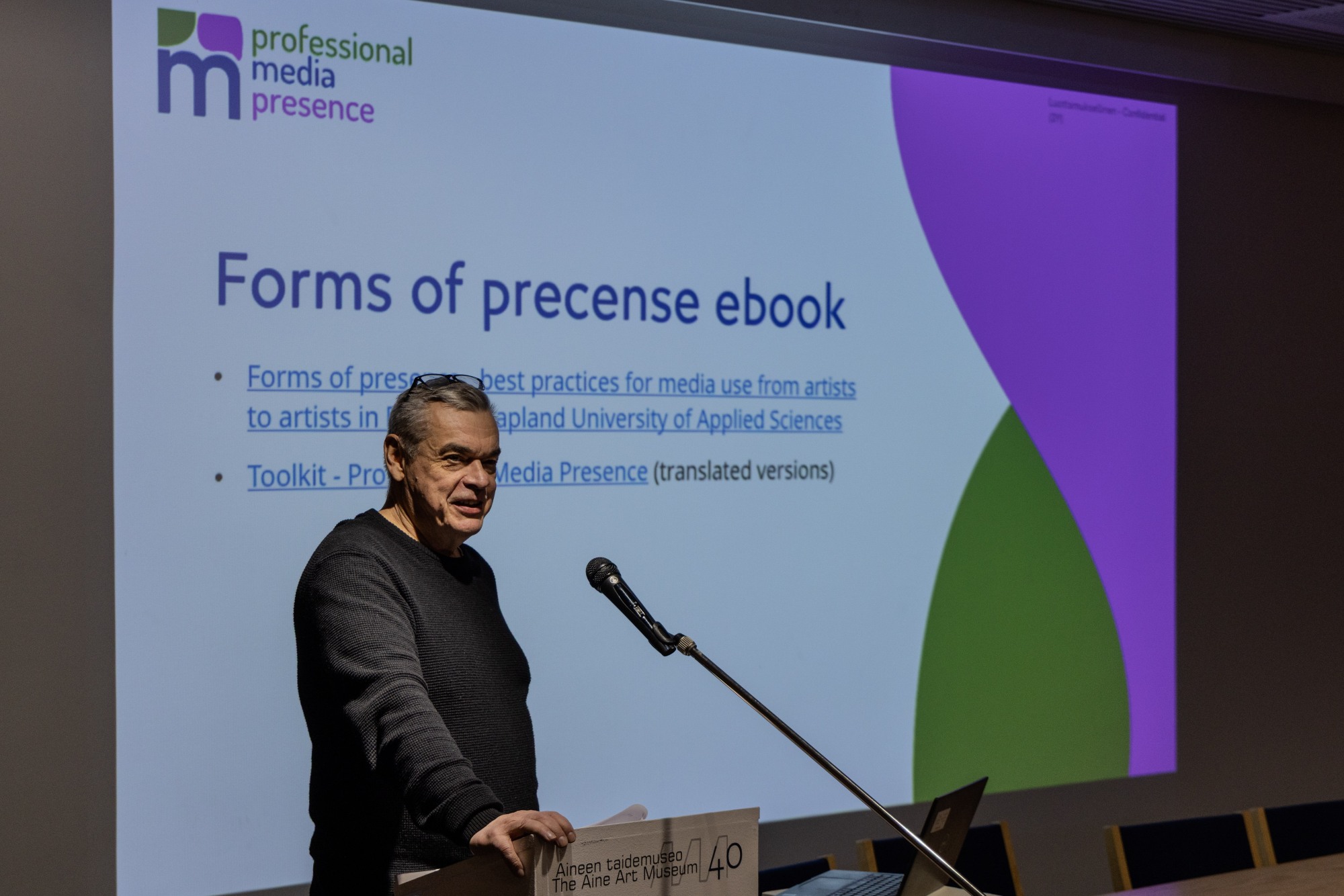
The publication explores topics such as artistic livelihoods, media use and professional development, while highlighting the diverse ways artists relate to social media, visibility and professional identity.
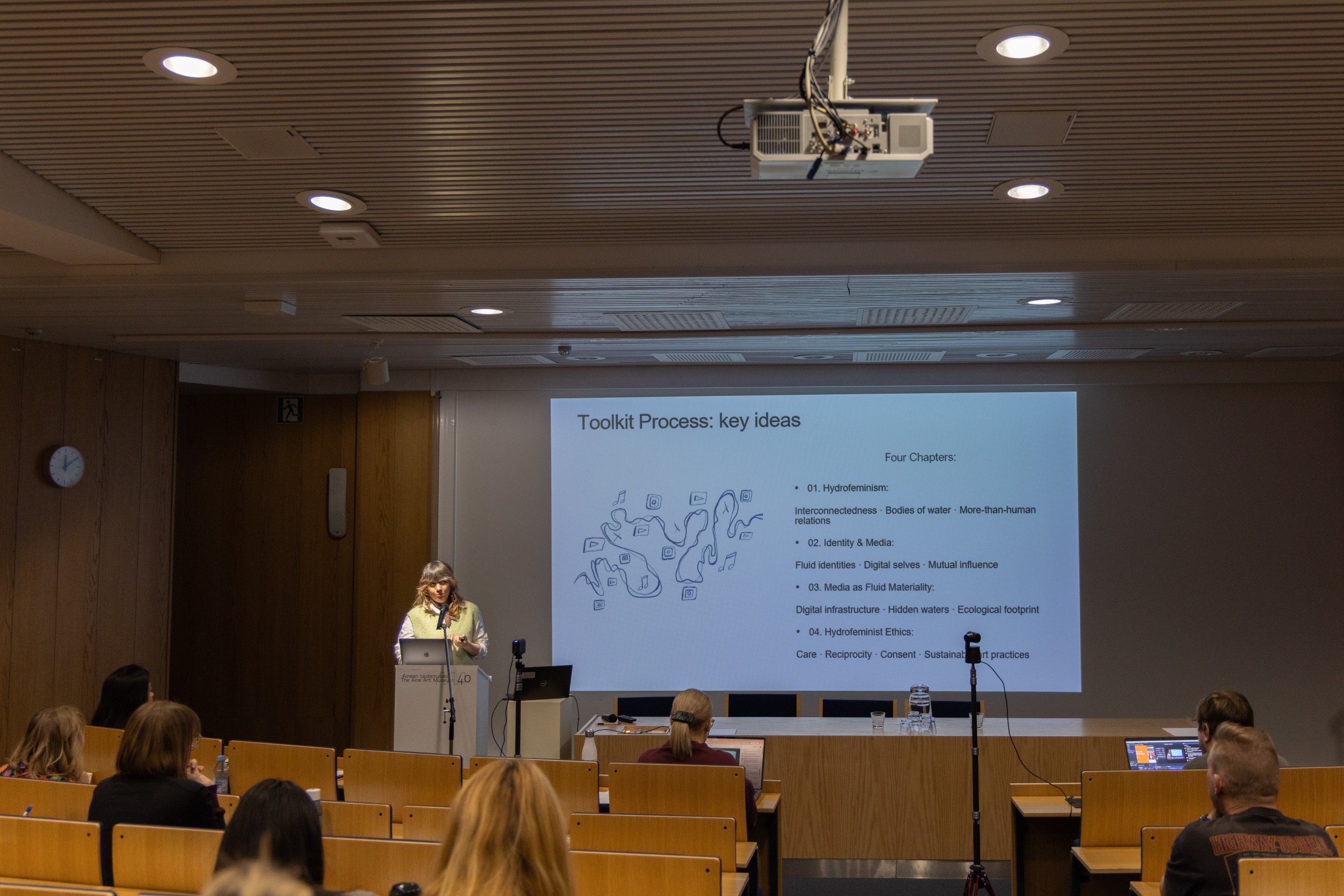
Artist Alexandra Stroganova reflected on her experiences within the PMP project, including workshops, residencies and the process of contributing to the toolkit. Her chapter, Media and Identity Through a Hydrofeminist Lens, explores questions of identity, interconnectedness and our relationship with media, inviting readers to reflect rather than offering ready-made answers. As she explained, “the aim was not to provide ready-made answers but rather food for thought and opportunities for deeper reflection”.
Inclusion and visibility through artistic practice
The seminar also featured artist Angela Bettoni, whose journey within the PMP project has included workshop weeks, seminars and an artist residency in Venice. Throughout the project, she has developed and presented new artistic work while engaging with fellow artists across Europe.
Angela Bettoni brought her insights via a pre-recorded video. Bettoni’s contribution offered an important perspective on inclusion, representation and visibility in the arts. Drawing on her experiences within the PMP project, she reflected on the opportunities created through international collaboration and the importance of ensuring that artists with diverse backgrounds and abilities have opportunities to participate, develop their artistic practice, build professional networks and gain visibility for their work.
Reflections from the artists
The seminar included also a panel discussion which brought together artists and project partners to reflect on their experiences. The panel discussion highlighted how artistic practice develops through dialogue, trust and collaboration rather than isolation.
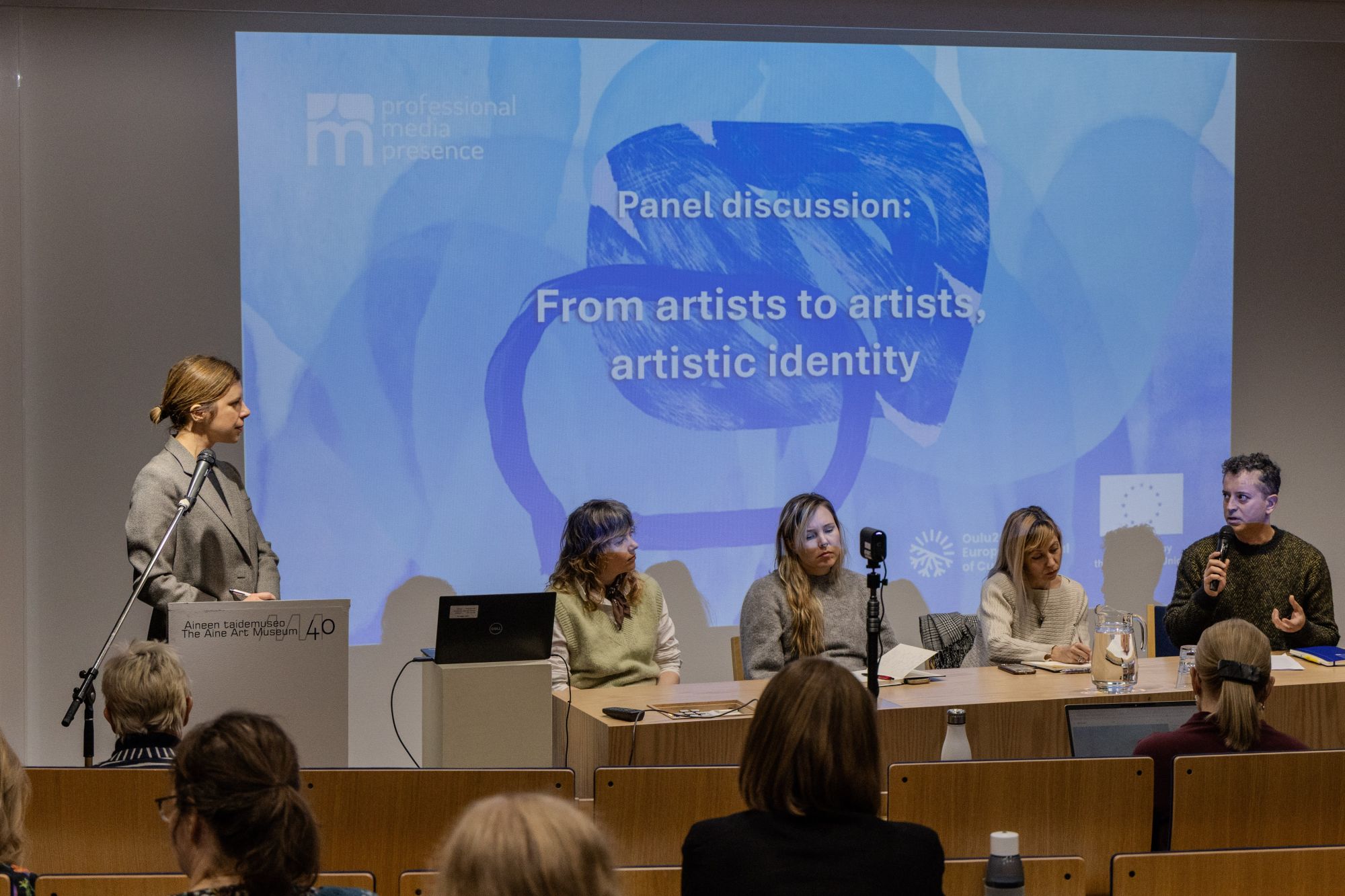
The panellists challenged the traditional image of the artist as a solitary creator. Instead, they described artistic practice as something that develops through dialogue, trust and collaboration with others.
Failure as part of the process
Particularly powerful was the discussion around experimentation and failure. Rather than being viewed negatively, failure was described as an important part of artistic growth and a way of questioning existing norms and expectations. The panel also emphasised the importance of creating environments and support structures that allow artists to experiment, take risks and develop ideas without fear of judgement.
When asked what they would take away from the PMP project, the responses focused less on tools and methods and more on people. Participants highlighted lasting professional relationships, supportive learning environments and meaningful conversations.
Looking ahead – collaboration beyond the PMP project
As Marika Saranne from Lapland UAS and Jenni Nuorala from the City of Tornio and the Oulu2026 European Capital of Culture programme noted in their opening remarks, the PMP project has ultimately been about much more than media skills or digital visibility. Throughout the four-year project, artists, students, researchers and cultural professionals have built lasting international networks, opened new opportunities for collaboration and strengthened connections between local communities and the wider European cultural sector.
The final seminar demonstrated that while digital platforms continue to evolve rapidly, artists across Europe share many of the same challenges and opportunities. Perhaps the most lasting legacy of the PMP project will be the connections, trust and collaborations formed along the way, as participants continue to learn from one another and shape the future of artistic practice in the digital age.
Writer: Marjo Jussila, Lapland University of Applied Sciences, PMP Partner
Photos: Eveliina Jäntti